
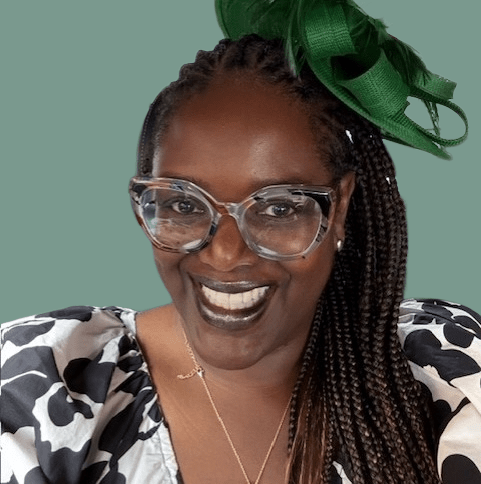
By: Hon. Stephanie M. Jones
My maternal grandmother passed away earlier this year at the age of 99, and her memory has been sitting with me in unexpected ways. She was my last living grandparent. The more I reflect, the more I realize that one of the most enduring images I have of her is her hair—always perfect, always coiffed, never a curl out of place. Her hair seemed effortless, the kind of effortless I didn’t think was available to me.
Growing up, my hair was more coarse than hers, my mother’s, or even my paternal grandmother’s. And because children make meaning long before they gain context, I assumed my hair was a “worse grade.” Harder. Less beautiful. In need of fixing.
And there was a fix—what many of us came to call the “creamy crack.”
I received my first relaxer when I was five years old. As a five-year-old, I obviously didn’t fix my hair; my mother did. Or rather, she tried to. But my hair frustrated her, so she asked my paternal grandmother to do it. And she did.
We affectionately called her “Grandlady.” Grandlady loved me with a tenderness that felt steady, grounded, and sure. She doted on me—yet she also carried that old-school steel that so many Black grandmothers possessed. She often commented, “I have never seen any other baby with hair as thick as yours.” She meant it with both awe and exhaustion.
Grandlady broke me of being “tender-headed” early, because she wasn’t going to tolerate crying while she straightened my hair. She would gently—but firmly—remind me to sit still, lean forward, tilt my head just right. To her, this wasn’t just grooming; it was training. A rite of passage. An introduction to Black womanhood long before I understood what that meant.
She also told me often how important it was to make sure my hair was “neat, clean, and that I never let anyone touch my crown.” She used that word intentionally. Crown. Even as she straightened it, even as she tamed it, even as she tried to protect me from the world’s judgments, she knew my hair was something sacred.
Grandlady’s presence was warmth wrapped in steel. My Grandfather Jones affectionately called her “Red,” because she had striking red hair and a temper that could occasionally match it—but only when somebody had truly tried her. None of us grandchildren used the nickname, but hearing him say it painted a fuller picture of who she was: fiery, unforgettable, and beautifully her own. And let me be honest: I absolutely inherited my natural red highlights and that little spark of a temper from her—proof that genetics has a sense of humor.
Grandlady passed away two weeks before her 91st birthday in 2014, but her presence—her voice, her instructions, her expectations—remains vivid. Her mother died when she was five years old, so the details of her lineage are thin—held by fragments and the unspoken truths so many Black families carry. But she was fair skinned, and given the history of slavery, it would not be a stretch to assume that somewhere in her bloodline, one parent carried white ancestry.
Her hair changed over the years that I knew her—sometimes shorter, sometimes set, sometimes pressed—but one thing remained constant: Grandlady never relaxed her hair. She never touched the creamy crack. Like my maternal grandmother, she didn’t “need” it because her hair was soft without chemicals. She simply shaped it, styled it, and protected it. To her, the idea of using chemicals to force hair to behave was unnecessary—her crown didn’t require bending.
At the time, I didn’t understand what that meant. I thought my hair was “hard.” Difficult. Resistant. A problem to be solved. But the irony—one of the great revelations of adulthood—is that it wasn’t my natural hair that was hard. It was the chemicals.
Without relaxers, my hair is cashmere soft. Luxurious. Supple. Touchable. Everything I was taught to believe about its “difficulty” was a lie—one fed by a society determined to make Black girls doubt their own reflection. All the misinformation, all the comparison, all the assumptions about “good hair” versus “bad hair” lodged themselves into my childhood thinking. And yet, the reality—my reality—was entirely different. I inherited softness I didn’t even know I carried—because the world taught me to see my hair through someone else’s lens instead of my own.
Neither grandmother used their lineage to explain their hair versus mine. They simply loved me. They simply did my hair. They simply told me it was my crown. And because they never used their ancestry to contextualize texture, I grew up comparing what I saw—never knowing the deeper histories beneath our strands.
Creamy Crack & the Cost of Belonging
The first time my hair was chemically straightened, it was bone straight. I remember that moment, that feeling. It was the same feeling I got when I placed a towel on my head and swung it around pretending I had long, flowing hair like the white girls I saw on TV.
But this time, I didn’t need the towel. I looked just like the girls on the “Just for Me” box. My hair fell past my shoulders, down to my mid-back. I swung it at every opportunity—running errands, walking through school hallways, even just sitting in my room. I felt unstoppable. Seen. Acceptable.
Yes, the process burned. Every time. My scalp tingled, stung, and sometimes scabbed. But the promise of belonging—of looking like the other girls in my school in East Tennessee—felt more important than any fleeting pain. When new growth appeared, I counted the days until my next relaxer. I tracked my relaxer schedule more faithfully than my menstrual cycle.
Swimming? Didn’t learn how to until my late 40s.
Sports? Managed with a small army of products in my backpack.
Self-worth? Entangled with straightness.
A Shift in the Mirror
Years later, not long after my Granddaddy passed, I stopped by my maternal grandparents’ house. My grandmother had just stepped out of the shower when she greeted me warmly at the door. I remember nothing about our conversation because I couldn’t stop staring at her hair.
It was wet.
She was air-drying it.
In three decades of living, I had never seen a Black woman casually air-dry her hair. And her hair? It had waves. Not curls—waves. Soft, S-shaped, stunning waves. I finally said, “Grandma, let me let you go so you can dry your hair before it curls up too much.” She laughed lightly. “Baby, my hair always looks like this. I just blow out the curls and roll it so it fits in.” “Fits in how?” I asked. “Your hair is gorgeous.” She shrugged. “My hair’s too soft to make a beautiful afro like yours. And with my coloring, I always wanted to make sure people knew I was Black. Making my hair look like the rest of the ladies mattered.”
In that moment, irony became revelation. I had spent my life wishing my natural hair looked like hers, while she longed for the fullness and coil of mine. Both of us, across generations, bending our crowns to fit a standard never made for us.
What I didn’t learn until that Christmas—when an Ancestry.com report landed in our laps—was that her mother, my Great-Grandmother Carrie, was actually white. All my life we’d been told she was Native American (which, in hindsight, feels like every Black family’s go-to origin story). She carried the truth quietly her entire life and never shared it with me—not when I wondered why her hair waved instead of curled, not when I studied her softness and wondered where I fit in. She kept those pieces tucked away, perhaps to protect herself, perhaps to protect me, or perhaps because explaining them would have meant reopening doors she had long decided to keep closed.
That was the year I stopped relaxing my hair.
THE HISTORY OUR HAIR CARRIES
Our hair stories are never just about hair. They are about what this country has demanded from us—through laws, norms, and unspoken rules about what “professional” or “acceptable” looks like.
Black hair has been regulated, punished, and policed for centuries:
- 18th-century tignon laws forced Black women in Louisiana to cover their hair because it was considered “too distracting.”
- During Jim Crow and throughout the 20th century, straightened hair became a form of survival, a ticket to employment and safety.
- Schools and workplaces routinely banned afros, braids, locs, twists, and bantu knots under “dress codes,” with courts often upholding these bans because Title VII did not explicitly protect hairstyles.
So relaxers weren’t just beauty products; they were survival tools. They were armor. They were assimilation wrapped in sodium hydroxide.
THE CROWN ACT: WHEN LAW MEETS LEGACY
For decades, Black people fought hair discrimination cases and lost because courts deemed hair “mutable”— something one could simply change.
The CROWN Act—Creating a Respectful and Open World for Natural Hair—changed that. Passed in California in 2019 and now adopted by more than 20 states, it prohibits discrimination based on:
- Natural hair
- Braids
- Locs
- Twists
- Afros
- Protective styles
- Hair texture
It affirms what our grandmothers always knew:
Our natural hair is not unprofessional.
It is not inappropriate.
It is not inferior.
It is ours.
While the federal version has not yet been fully enacted, the movement continues. Society is finally legislating what Black girls have always deserved: dignity without condition.
INTERGENERATIONAL HEALING
What strikes me most now is how the journey back to my natural hair didn’t belong to me alone—it belonged to my mother too.
My mother loves my natural hair now. She compliments it. She talks about how beautiful it is. She tells me it fits me—confidently, proudly, freely.
But she didn’t feel that way at first.
She, too, had been raised inside a world that made straight hair a prerequisite for safety, respectability, and acceptance. She believed she was helping me fit into a world that judged little Black girls harshly. She believed she was doing the right thing.
Watching her warm to my natural texture—loving it, celebrating it—has felt like watching a generational knot loosen. Healing ripples backward and forward at the same time.
I often think about this lineage:
- My maternal grandmother straightened her waves to assert her Blackness.
- My paternal grandmother protected my “crown” with unwavering pride.
- My mother smoothed my hair believing it would smooth my path.
- And I broke free by returning to the coils they tried to tame.
It is not lost on me that the granddaughter of women shaped by whiteness, silence, and survival now walks through the world with an unhidden, unbent crown.
CONCLUSION: WEAR THE CROWN
Today, every twist, curl, coil, puff, or protective style I wear feels like a tribute.
A reclamation.
A declaration.
Our crowns are not flawed.
Our crowns are not problems to solve.
Our crowns are stories—of resilience, heritage, beauty, and becoming.
I wear mine now with the pride it always deserved.
DEDICATION
For Grandlady (1923–2014)
and
Grandma (1926–2025)
Your love shaped me.
Your stories taught me.
Your crowns—whether waved, rolled, straightened, or protected—anchored mine.
Everything I know about resilience and beauty began with you.
And for my Mumu:
Thank you for allowing me to now make sure your hair is neat and presentable.
Caring for your crown is one of the greatest honors of my life.
Del cabello completamente lacio a la liberación: El cabello afroamericano, el amor generacional y la lucha legal contra la crema crack
Autora: Honorable Stephanie M. Jones
Mi abuela materna falleció a principios de este año a los 99 años, y su memoria me ha estado visitando de formas inesperadas. Ella era mi última abuela viva. Cuanto más reflexiono, más me doy cuenta de que una de las imágenes más palpables que tengo de ella es su cabello, siempre perfecto, siempre peinado, jamás un rizo fuera de lugar. Su cabello parecía fácil de controlar. Era una facilidad que no estaba a mi alcance.
De niña, mi cabello era más grueso que el de ella, el de mi madre e incluso el de mi abuela paterna. Y como los niños le dan significado a las cosas mucho antes de entender el contexto, supuse que mi cabello era “de peor calidad”. Más grueso. Menos bello. Que necesitaba arreglo.
Y sí había un arreglo: lo que muchas de nosotras llegó a llamar la “crema crack” (creamy crack).
Me alisaron el cabello por primera vez cuando tenía cinco años. Obviamente, a esa edad yo no me arreglaba el cabello. Lo hacía mi madre. O más bien, lo intentaba. Pero mi cabello le causaba frustración, así que le pedía a mi abuela paterna que lo hiciera. Y ella lo hacía.
La llamábamos afectuosamente la “Gran dama” (Grandlady) La Gran dama me amaba con una ternura confiable, anclada a tierra y segura. Ella me adoraba, pero también comunicaba ese acero tradicional que poseían tantas abuelas afroamericanas. Con frecuencia comentaba: “Jamás he visto a ningún otro bebé con cabello tan grueso como el tuyo”. Lo decía con admiración y agotamiento.
La Gran dama me curó de mi “cuero cabelludo sensible” a temprana edad porque no podía tolerar que yo llorara mientras ella me alisaba el cabello. Me recordaba suave pero firmemente que debía quedarme sentada y quieta, inclinarme hacia adelante y ladear la cabeza con el ángulo perfecto. Para ella, no se trataba tan solo de una actividad de cuidado personal. Era un entrenamiento. Un rito de iniciación. Una introducción a la feminidad afroamericana mucho antes de que yo entendiera lo que esto significaba.
También me hablaba con frecuencia de la importancia de que mi cabello se viera “arreglado, limpio y de que jamás dejara que nadie tocara mi corona”. Usaba esa palabra intencionalmente. Corona. A pesar de que lo alisaba, a pesar de que lo domaba, a pesar de que trataba de protegerme de las opiniones del mundo, ella sabía que mi cabello era algo sagrado.
La presencia de la Gran dama irradiaba calidez envuelta en acero. Mi abuelo Jones la apodaba afectuosamente “Red” (rojo) porque tenía una cabellera color rojo vivo y un carácter que a veces se asemejaba a ese color: pero solo cuando alguien la empujaba hasta el límite. Ninguno de nosotros los nietos utilizábamos ese apodo, pero cuando lo escuchábamos usar entendíamos con más claridad quién era mi abuela: fogosa, inolvidable y bellamente ella misma. Y les digo la verdad: Estoy totalmente segura de que heredé mis reflejos rojos y esa pequeña chispa de mal genio de ella, lo cual comprueba que la genética tiene sentido del humor.
La Gran dama falleció dos semanas antes de su nonagésimo primer cumpleaños en 2014, pero su presencia, su voz, sus instrucciones y sus expectativas siguen vivas en mí. Su madre falleció cuando ella tenía cinco años, así que tengo pocos detalles de su linaje sostenidos por los fragmentos y las verdades nunca expresadas que cargan consigo tantas familias afroamericanas. Pero ella tenía la piel clara y, teniendo en cuenta la historia de la esclavitud, no era disparatado suponer que posiblemente su genealogía incluía a un padre con ascendencia blanca.
Su cabello cambió con el paso de los años que la conocí. A veces lo llevaba más corto, a veces se ponía ruleros y a veces lo planchaba, pero siempre había una constante: La Gran dama jamás se alisaba el cabello. Ella jamás tocaba la crema crack. Al igual que mi abuela materna, no la “necesitaba” porque su cabello no necesitaba sustancias químicas para ser más suave. Ella simplemente le daba forma, lo peinaba y lo protegía. Para ella, la idea de usar sustancias químicas para obligar al cabello a comportarse era innecesaria. Su corona no necesitaba doblegarse.
En esa época, yo no entendía lo que significaban estos temas. Pensaba que mi cabello era “duro”. Difícil. Resistente. Un problema que debía resolverse. Pero la ironía, y una de las revelaciones más grandes de mi vida adulta, es que lo duro no era mi cabello natural sino las sustancias químicas.
Sin los alisadores, mi cabello era suave como la cachemira. Suntuoso. Flexible. Agradable al tacto. Todo lo que me habían enseñado a creer sobre su “dificultad” era una mentira inventada por una sociedad decidida a lograr que las niñas afroamericanas dudaran de su propio reflejo. Toda la información errada, todas las comparaciones, todas las suposiciones sobre el “cabello bueno” comparado con el “cabello malo” se incrustaron en mis pensamientos de niña. Y aún así, la realidad, mi realidad, era completamente diferente. Heredé una suavidad que ni siquiera sabía que tenía, porque el mundo me enseñó a ver mi cabello a través del lente de otras personas en lugar del mío.
Ninguna de mis dos abuelas usaba su linaje para explicar su cabello ni compararlo con el mío. Simplemente me amaban. Simplemente me arreglaban el cabello. Simplemente me decían que era mi corona. Y como jamás usaron su ascendencia para contextualizar la textura, crecí comparando lo que veía, sin conocer las historias más profundas que ocultaban nuestras melenas.
La crema crack y el costo de pertenecer
La primera vez que me alisaron el cabello, me quedó completamente lacio. Recuerdo aquel momento, esa sensación. Era la misma sensación que tenía cuando me ponía una toalla en la cabeza y la revoleaba por el aire haciendo de cuenta que tenía cabello largo y fluido, como las niñas blancas que veía en la televisión.
Pero esta vez, no necesité la toalla. Me veía tal como las muchachas que aparecían en la caja del alisador. Mi cabello se extendía más abajo de mis hombros, hasta la mitad de la espalda. Lo revoleaba cada vez que podía: cuando salía a hacer las compras, cuando caminaba por los pasillos de la escuela, e incluso cuando estaba sentada en mi habitación. Me sentía invencible. Vista. Aceptable.
Sí, el proceso químico me quemaba. Todas las veces. Mi cuero cabelludo cosquilleaba, ardía y a veces me salían costras. Pero la promesa de pertenecer, de verme como las otras niñas en mi escuela en Tennessee del Este, me parecía más importante que ese dolor pasajero. Cuando mi cabello crecía, contaba los días hasta el próximo alisado. Le prestaba más atención a las fechas de alisado que a las de mi ciclo menstrual.
¿Sabía nadar? No aprendí hasta bien entrados los 40.
¿Hacía deportes? Los hacía con un pequeño ejército de productos que llevaba en la mochila.
¿Mi autoestima? Enredada con los alisadores.
Un cambio en el espejo
Años más tarde, poco tiempo después de fallecer mi abuelo, pasé por la casa de mis abuelos maternos. Mi abuela acababa de salir de la ducha y me recibió cálidamente en la puerta. No recuerdo nada de nuestra conversación porque no podía dejar de admirar su cabello.
Estaba mojado.
Lo estaba dejando secar al aire.
En tres décadas de vida, jamás había visto a una mujer afroamericana dejándose secar el cabello al aire. ¿Y su cabello? Tenía ondas. No eran rizos, sino ondas. Ondas suaves, con forma de S, bellísimas. Finalmente le dije: “Abuela, te dejo tranquila para que te puedas secar el cabello antes de que se ponga demasiado rizado”. Ella rió ligeramente. “Mi amor, mi cabello siempre se ve así. Lo único que hago es secarme los rulos y me pongo ruleros para encajar”. “¿Cómo para encajar?”, le pregunté. “Tu cabello es hermoso”. Ella encogió los hombros. “Mi cabello es demasiado suave para tener un afro bello como el tuyo. Y con mi color de piel, siempre he querido asegurarme de que la gente sepa que soy afroamericana. Es importante para mí que mi cabello se vea como el de las otras señoras”.
En ese momento, la ironía se convirtió en una revelación. Me había pasado la vida deseando que mi cabello natural se viera como el de ella, mientras ella deseaba el volumen y los rizos del mío. Las dos habíamos retorcido nuestras coronas durante generaciones para encajar en una norma que no había sido creada para nosotras.
Lo que no aprendí hasta esa Navidad, cuando un informe de Ancestry.com llegó a nuestro poder, fue que su madre, mi bisabuela Carrie, era realmente blanca. Toda la vida nos habían dicho que ella era nativoamericana (lo cual ahora que lo pienso se parece bastante a la narrativa de origen más utilizada entre las familias afroamericanas). Mi abuela calló la verdad durante toda su vida y jamás la compartió conmigo, ni siquiera cuando me pregunté por qué su cabello tenía ondas en lugar de rizos, ni cuando estudiaba su suavidad y me preguntaba dónde encajaba yo. Ella ocultó esas partes tal vez para protegerse, tal vez para protegerme, o tal vez porque explicarlas hubiera sido volver a abrir puertas que había decidido hace tiempo mantener cerradas.
Ese fue el año que dejé de alisarme el cabello.
LA HISTORIA DE NUESTRO CABELLO
Las historias de nuestro cabello jamás son solo sobre el cabello. Tienen que ver con lo que ha exigido de nosotros este país a través de sus leyes, normas y reglas tácitas sobre el aspecto de lo “profesional” o “aceptable”.
El cabello de los afroamericanos ha sido regulado, castigado y controlado durante siglos:
- Las leyes del tocado del siglo dieciocho obligaban a las mujeres afroamericanas a cubrirse el cabello porque se consideraba “que distraía demasiado”.
- Durante la era de Jim Crow y todo el siglo veinte, el cabello alisado se volvió una forma de supervivencia, un boleto para obtener empleo y estar a salvo.
- Las escuelas y los lugares de trabajo prohibían frecuentemente los afros, las trenzas, las rastas, los bucles y los nudos bantú con sus “códigos de vestimenta”, y los tribunales solían defender estas prohibiciones porque el Título VII no protegía explícitamente los tipos de peinado.
Por esta razón, los alisadores no eran solo productos de belleza. Eran herramientas de supervivencia. Eran una armadura. Eran la asimilación racial envuelta en hidróxido de sodio.
LA LEY DE LA CORONA: CUANDO LA LEY ACOMPAÑA EL LEGADO
Durante décadas, los afroamericanos presentaron casos de discriminación por su cabello y perdieron porque los tribunales consideraban que el cabello era algo “mutable” que podía cambiar simplemente.
La Ley CROWN (CORONA), las siglas en inglés de la frase «creando un mundo respetuoso y abierto para el cabello natural», cambió esa opinión. Esta ley, promulgada en California en 2019 y ahora adoptada por más de 20 estados, prohíbe la discriminación basada en:
- El cabello natural
- Las trenzas
- Las rastas
- Bucles
- Los afros
- Los estilos protegidos
- La textura del cabello
La ley afirma lo que nuestras abuelas siempre supieron:
Nuestro cabello natural no es poco profesional.
No es inapropiado.
No es inferior.
Es nuestro.
Aunque aún no se ha promulgado plenamente una versión federal de la ley, el movimiento continúa. Por fin la sociedad está legislando lo que siempre merecieron las niñas afroamericanas: una dignidad sin condiciones.
CURACIÓN INTERGENERACIONAL
Lo que más me asombra es cómo la travesía de regreso a mi cabello natural no me perteneció a mí sola. También le perteneció a mi madre.
Ahora mi madre ama mi cabello natural. Le hace cumplidos. Habla de lo hermoso que es. Me dice que me queda bien con confianza, orgullo y libertad.
Pero al principio no sentía lo mismo.
Ella también había sido criada en un mundo en el que el cabello lacio era un requisito previo para la seguridad, el respeto y la aceptación. Ella creía que me estaba ayudando a pertenecer en un mondo que juzgaba duramente a las niñas afroamericanas. Creía que estaba haciendo lo correcto.
Verla llegar a disfrutar de mi textura natural, amándola, celebrándola, ha sido como presenciar la disolución de un nudo generacional. Son ondas curativas que viajan hacia el pasado y el futuro al mismo tiempo.
Suelo pensar en este linaje:
- Mi abuela materna se alisaba las ondas para afirmar su origen afroamericano.
- Mi abuela paterna protegía mi “corona” con un orgullo inamovible.
- Mi madre me alisaba el cabello porque creía así alisarme el camino.
- Y yo me liberé al regresar a los rizos que trataron de domar.
No se me escapa que la nieta de mujeres moldeadas por los ideales blancos, el silencio y la necesidad de sobrevivir camina ahora por el mundo con una corona que no se oculta ni se doblega.
CONCLUSIÓN: LLEVA PUESTA TU CORONA CON ORGULLO
Hoy en día, cada bucle, rizo, mota, afro o estilo protegido que uso me parece un tributo.
Una recuperación.
Una declaración.
Nuestras coronas no son defectuosas.
Nuestras coronas no son problemas que debemos resolver.
Nuestras coronas son historias de resistencia, legado, belleza y devenir.
Llevo puesta la mía con el orgullo que siempre mereció.
DEDICACIÓN
Para la Gran dama (1923–2014)
y
Mi abuela materna (1926–2025)
Su amor me dio forma.
Sus historias me enseñaron.
Sus coronas, ya sean ondeadas, enruladas, alisadas o protegidas, fueron mi ancla.
Todo lo que sé sobre la capacidad de resistir y la belleza comenzó con ustedes.
Y para mi mumu (mamá):
Gracias por permitirme asegurarme ahora que tu cabello se vea peinado y presentable.
Cuidar tu corona es uno de los mayores honores de mi vida.
 Health Equity News
Leave a comment